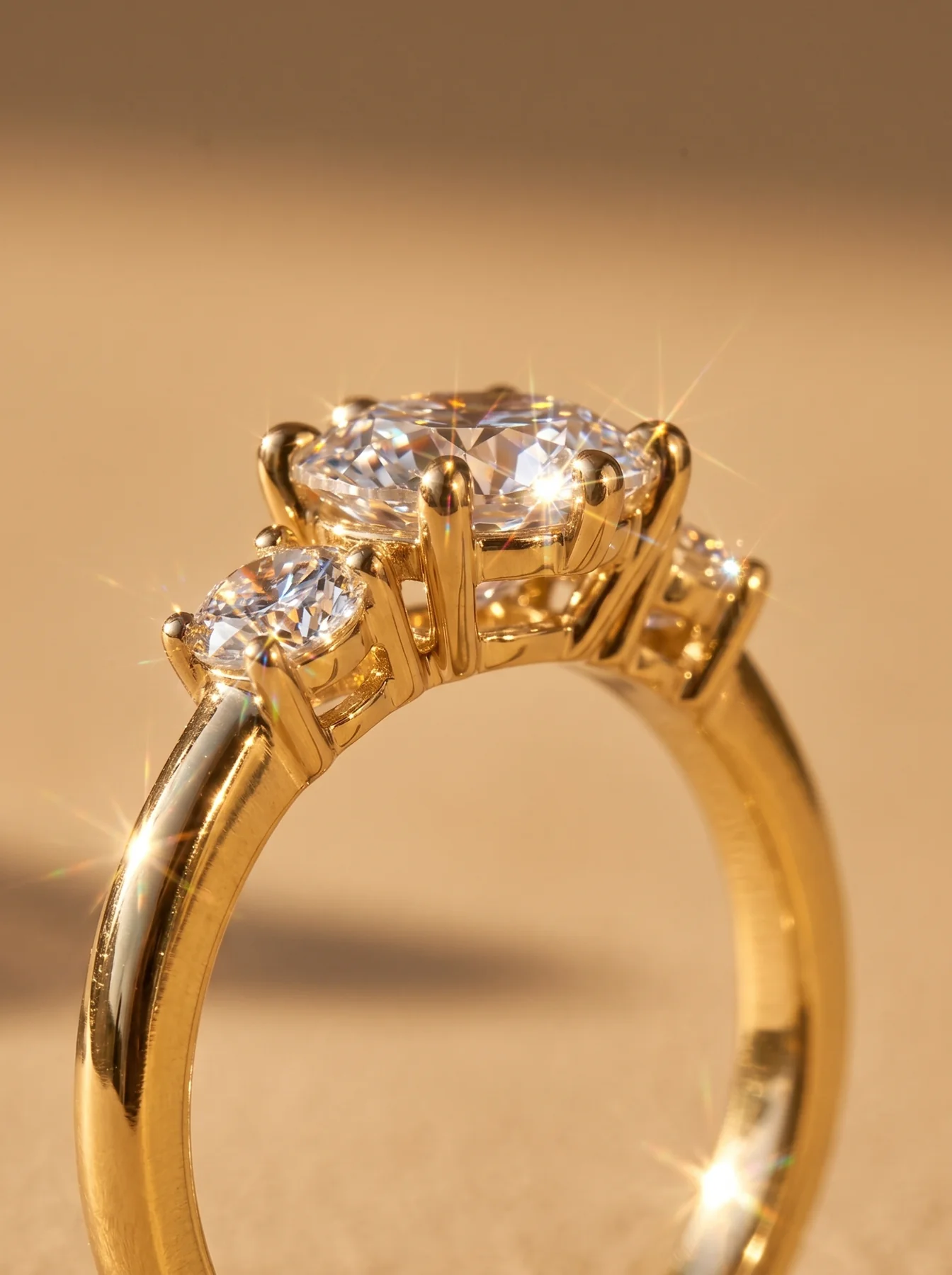
A little attention before and after wearing your jewellery makes care easier. Look after the complete piece: its diamond, its metal, its claws and its clasp.
Build a gentle care routine
GIA recommends gentle cleaning and cautions against abrasive powders, steam and ultrasonic cleaning at home. A diamond can resist scratching yet still chip under impact, and a loose stone can damage its setting. Read GIA’s diamond care and cleaning guidance.
Before you clean, inspect your piece in good light. If a claw looks bent, a stone moves, or a clasp does not close properly, put the jewellery aside and ask for an inspection. Cleaning is not a repair, and more force will not fix a loose setting.
A simple cleaning method
For sound, untreated diamond jewellery without delicate companion materials, a mild routine is a useful starting point. Check the care instructions for your particular piece first; treatments, adhesives, other gemstones and finishes may need different handling.
- Use a bowl of lukewarm water with a little mild washing-up liquid. Work away from an open plughole.
- Gently loosen surface dirt with a very soft brush, taking care around claws and underneath the setting.
- Rinse in a separate bowl of clean water and pat dry with a soft, lint-free cloth.
- Check the piece again before wearing it. If dirt remains in a hard-to-reach area, ask for help rather than scraping it out.
Give jewellery a safe place during activities
Our practical recommendation is to take jewellery off before heavy lifting, gardening, swimming or household cleaning. Choose one consistent, secure place to put it; avoid leaving it on the edge of a sink. Put jewellery on after applying lotions and fragrance, and wipe away residue after wear.
For bracelets and necklaces, check the fastening before leaving home. If a chain starts catching on clothing, stop wearing it until you have checked for a damaged link or raised claw.
How do you care for a diamond bracelet without loosening stones?
Support the bracelet while cleaning rather than pulling it taut. Brush gently around each setting and check the clasp and safety catch before wearing it. If a link catches on clothing or a stone moves, stop wearing it and arrange an inspection. Avoid scraping between stones or using an ultrasonic cleaner without advice for that specific piece.
Explore our tennis bracelet guide for setting and fastening considerations.
Remember the metal, especially silver
The method must suit the setting as well as the diamond. For sterling silver, follow our Jewelry Care guide and ask before using a silver dip or polishing product on a piece with stones. Do not assume a cleaner suitable for one item is suitable for every item.
Store pieces separately
Use separate soft pouches or compartments so chains do not tangle and stones do not rub against other jewellery. Fasten necklaces before putting them away. Make a quick visual check part of your routine, especially after a knock.
When should you ask for professional care?
Arrange an inspection if you notice movement, a missing stone, a sharp edge or a damaged clasp. Tell the jeweller about any known treatments and previous repairs. Contact Victoria Diamonds for guidance on your piece, or explore our Silver Collection and its fixed-design specifications.
Discuss your jewellery in Hatton Garden, London
Victoria Diamonds welcomes visits by appointment at 59 Leather Lane, London EC1N 7TJ. Ask about your design, diamond choices or caring for your piece.