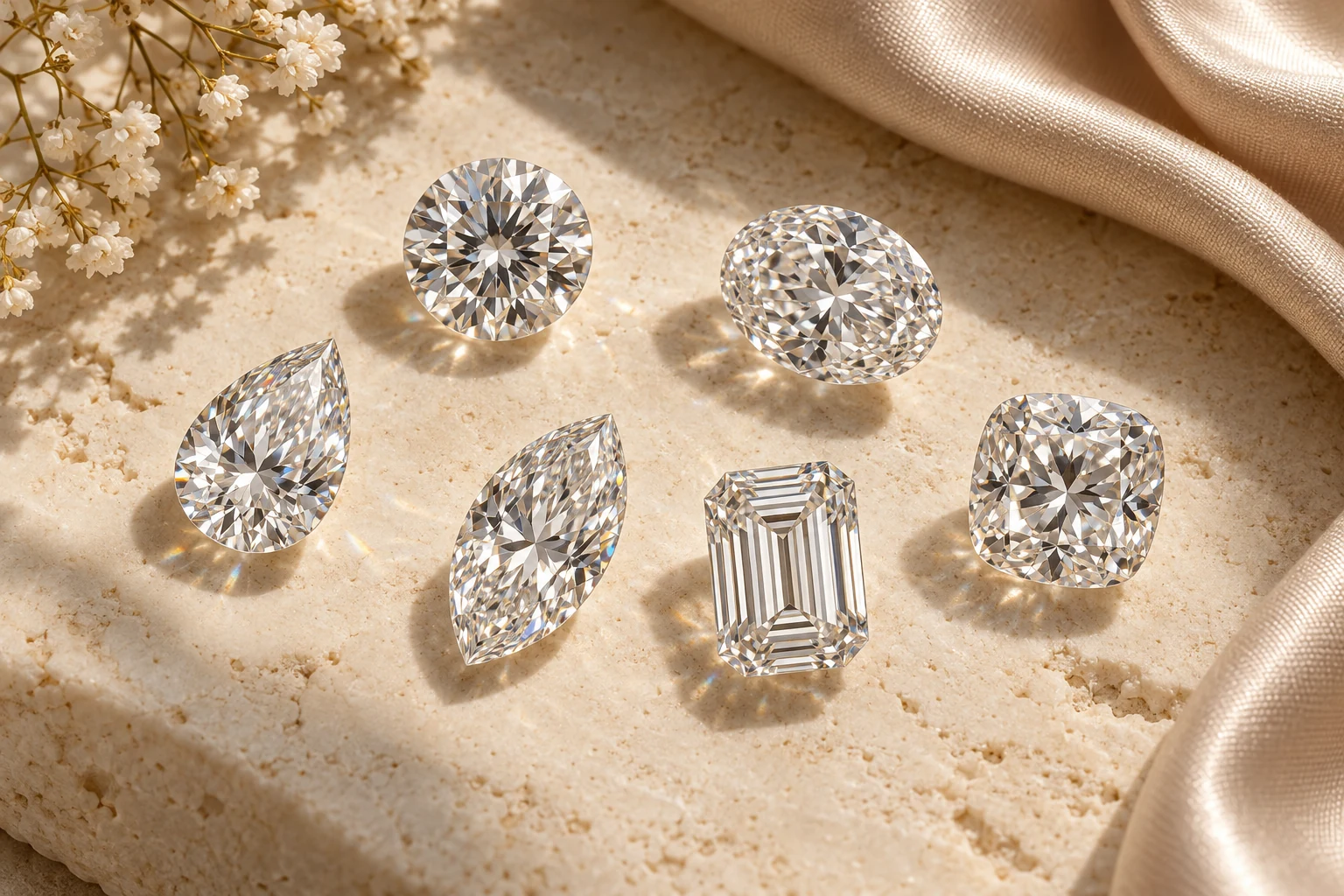
Start with the outline you enjoy, then compare the individual stone and its setting. Shape describes a diamond’s silhouette; cut style describes its facet arrangement. Neither word, by itself, guarantees brilliance or quality.
Separate shape from cut quality
A round outline is often cut in the brilliant style. Emerald and Asscher designs are familiar step-cut examples, with broader, more geometric reflections. Fancy shapes can use varied facet arrangements: cushion, for example, is not one single optical pattern.
Compare the stone’s measurements, symmetry and appearance in motion. Two diamonds of the same shape and carat weight can look different. See GIA’s guide to diamond shapes for an explanation of outline and cut style.
Compare the outlines you like
| Shape | Visual character | What to examine |
|---|---|---|
| Round | A balanced circular outline | Proportions and quality of light return |
| Oval | A softly elongated outline | Length-to-width ratio and dark areas in motion |
| Pear | A rounded end and a tapering point | Balance, symmetry and point protection |
| Marquise | An elongated outline with two points | Symmetry and protection at both tips |
| Emerald / Asscher | Step-cut geometry | Reflections, clarity and corner protection |
| Cushion | Rounded corners, square or elongated outline | Individual facet pattern and proportions |
| Princess | A square or rectangular outline with pointed corners | Corner protection and setting fit |
| Heart | A cleft and pointed base | Balanced lobes, symmetry and a clear outline |
Elongated outlines can give a different impression on the hand, but there is no guaranteed finger-lengthening or size advantage. Ask for millimetre dimensions and try the setting’s full outline, including any halo.
Consider how the setting protects the stone
Pear and marquise tips and princess corners deserve attention when choosing a setting. A protective arrangement must still be checked for wear and sound construction. Rounded outlines can also chip if struck.
Diamond is highly resistant to scratches, but it can chip or fracture under impact. GIA explains why hardness and toughness are different. Ask a jeweller how the particular setting protects vulnerable points and edges.
Try the whole piece in everyday situations
Notice the setting’s height, how it feels beside neighbouring fingers and whether it catches clothing. Consider the design alongside any band you plan to wear. Shape is a personal preference, while comfort depends on the construction as well as the outline.
Our carat-size guide explains why weight is not the same as visible width. Use photographs for inspiration and measured dimensions for a more useful comparison.
How shape works in our collection
Our online pieces have predetermined diamond shapes. Choosing a different carat option does not switch the cut or outline of the design. Browse Aura or Forever Bond to find a shape you like, then review that piece’s available controls.
For a different shape or a bespoke engagement ring, book an appointment with Victoria Diamonds in London to discuss feasibility and the full design.