Start with what matters to you: the stone’s origin, the design you love, and a budget you feel comfortable with. There is no single right choice for every person.
What is the difference?
Natural diamonds form in the earth; laboratory-grown diamonds are created in controlled conditions. Lab-grown diamonds have essentially the same chemical, physical and optical properties as natural diamonds. They are diamonds, rather than lookalikes such as cubic zirconia. Specialist laboratory testing can identify their origin. GIA explains the distinction between natural and laboratory-grown diamonds.
| Consideration | Natural diamond | Lab-grown diamond |
|---|---|---|
| Origin | Formed in the earth | Grown in a laboratory |
| Personal appeal | May suit someone drawn to geological origin | May suit someone comfortable with a laboratory origin |
| What to check | Origin disclosure, specifications and any applicable report | Origin disclosure, specifications and any applicable report |
Choose around your priorities
If the story of a naturally formed stone is central to your purchase, make that clear at the beginning of your consultation. If your focus is the finished design, compare suitable lab-grown options alongside your preferred specifications. Ask for a current quotation for each option rather than relying on a general price comparison.
Put the whole piece into the decision. A necklace you enjoy wearing often may be a better choice for you than a larger ring that feels uncomfortable. Consider the metal, setting, proportions and the occasions you have in mind before settling on a stone.
Questions to ask before ordering
- Is the diamond natural or laboratory-grown, and is that written in the specification?
- What are the stone’s weight, dimensions and quality details?
- Does a laboratory report apply to this particular stone, and can I see it?
- What is included in the quotation, and what changes would affect it?
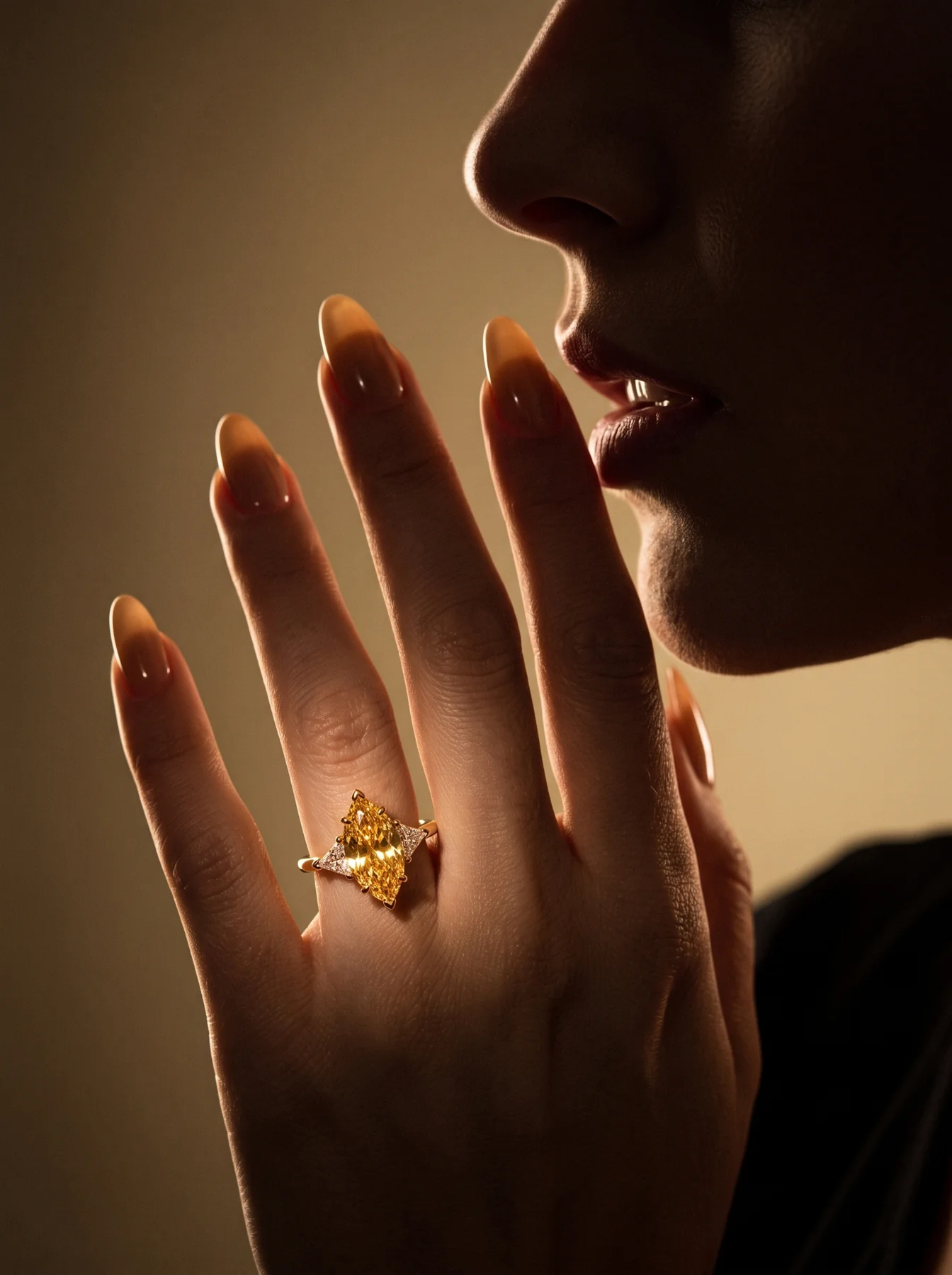
A product photograph shows a design; it does not establish a diamond’s origin. Likewise, a report is information about the stone, not a guarantee of future resale value. Avoid choosing on an investment promise. For environmental or sourcing claims, ask for evidence specific to the stone and supplier.
Your next step with Victoria Diamonds
Bring a favourite design and your priorities to a London appointment. Ask us to confirm origin, availability and any applicable documentation for the proposed stone before ordering. For inspiration, browse Forever Bond or the Daily Sparkle collection.
Can you tell the origin just by looking?
Do not rely on appearance alone. Ask for written disclosure and suitable laboratory identification where applicable. GIA describes why specialised testing is used in its guide to diamonds and diamond simulants.